The purpose of this report is to summarize ornamental plant producers' perceptions about neonicotinoid labeling and anticipated changes in production practices due to neonicotinoids labeling policy intervention. The target audience is industry, state agency, and public stakeholders involved in decisions and policy making related to the use of neonicotinoid insecticides in the U.S. ornamental plants industry.
https://edis.ifas.ufl.edu/fe1094
The History of Offshore Aquaculture Governance in the Gulf of Mexico
Aquaculture is a growing industry in Florida, and there is particular interest in offshore marine aquaculture. While inland and coastal aquaculture (like for shellfish or ornamental fish) is managed by the Florida state agency Florida Department of Agriculture and Consumer Services (FDACS), offshore aquaculture also involves federal management agencies. However, there has been some confusion and disagreement about which federal agencies will manage and make decisions about offshore aquaculture in the United States. This document describes a recent history and current state of that discussion. This information is important for potential aquaculturists and other stakeholders to understand, and should also provide guidance to management and outreach agencies seeking to inform stakeholders about offshore aquaculture.
https://edis.ifas.ufl.edu/fa230
Artificial Reefs and People: How We Create Them and How They Affect Us
Artificial reefs are constructed to provide several important ecosystem services to coastal communities and fisheries around the world, and their deployment results in significant socio-ecological and economic effects. To understand these effects, this document gives an overview of the agencies and people involved in the use of artificial reefs, how the implementation of these reefs influences their perception, and what issues are associated with their deployment. This document also specifically describes the process by which most artificial reefs are implemented in Florida.
https://edis.ifas.ufl.edu/fa231
Setting Transparent Expectations for Successful Group Work
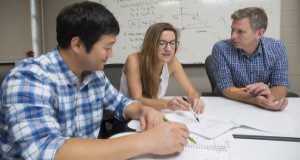
Regardless of workspace or class setting, group work has gotten a reputation for being less than pleasant. However, when individuals have the opportunity to prepare for group work via understanding their personal strengths, expectations, and perspectives, the not-so-popular group work can often turn into pleasant, productive, and collaborative engagement. Because group dynamics shift and vary from group to group, there is a constant learning opportunity to understand how to work in groups successfully. This new 2-page publication of the UF/IFAS Department of Agricultural Education and Communication will identify simple yet effective strategies that can serve as foundational building blocks whenever preparing oneself or others for group work. Written by Cecilia E. Suarez and Jarred A. Shellhouse.
https://edis.ifas.ufl.edu/wc389
Microsoft Teams for CEU and Training Delivery
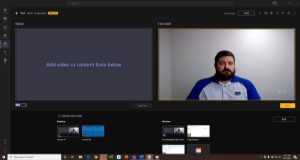
The Microsoft Teams collaboration platform is popular among UF/IFAS faculty, researchers, Extension agents, and staff for its ease of use and utility for internal and external communication, collaboration, and meetings. The Teams webinar feature called live events can be used for a more controlled experience for large meetings, events, or CEU delivery. This new 5-page article will discuss the benefits and possible limitations of this service, specifically for offering online CEU material that meets Florida Department of Agriculture and Consumer Services (FDACS) guidelines for such trainings. Written by Brett W. Bultemeier and Joe Gasper and published by the UF/IFAS Pesticide Information Office.
https://edis.ifas.ufl.edu/pi290
Building Bear Fences for Your Apiary
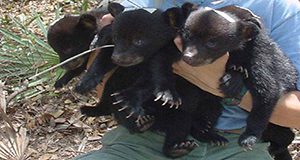
The American black bear is beloved, but it is also the most damaging vertebrate pest of honey bee apiaries in North America. That is in part because bears and beekeepers often share the same home territory. Many top beekeeping and pollination states also fall within the range of the American black bear. Can bears and beekeepers live in peace together? This 6-page fact sheet written by Kimberly K. Post and Cameron Jack and published by the UF/IFAS Entomology and Nematology Department details the basic steps for installing an electrified bear fence around a bee yard so that savvy beekeepers can protect hives and honey without harming honey-loving bears.
https://edis.ifas.ufl.edu/in1318
Optimizing Irrigation and Young Tree Management
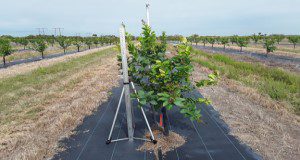
Young citrus trees require optimal irrigation management for vigorous vegetative growth, leaf flushing, and establishment of a dense canopy. Poor irrigation practices, such as infrequent irrigation or irrigating without using irrigation scheduling tools, could be costly. Besides excessive loss of water and nutrients, the growth of young trees might be impacted by an excess or deficit of water. Crop water stress in young trees directly affects yield and fruit quality. This new 2-page publication of the UF/IFAS Department of Soil and Water Sciences, written by Davie Kadyampakeni and Sandra Guzmán, covers some strategies for optimizing young tree care and irrigation management to in turn optimize grove efficiency and productivity.
https://edis.ifas.ufl.edu/ss701
Quick Reference Guide to Postemergence Herbicides for Citrus Weed Control
This quick reference table will provide growers with information (suggested rates, use restrictions, etc.) on different herbicides used in citrus. The herbicide table, prepared based on the Florida Citrus Production Guide, will aid growers to select an appropriate postemergent herbicide program in citrus groves. Written by Ramdas Kanissery, Camille E. McAvoy, Jamie D. Burrow, Stephen H. Futch, Brent A. Sellers, and S. Shea Teems, and published by the UF/IFAS Horticultural Sciences Department.
https://edis.ifas.ufl.edu/hs1410
The Feasibility of Farmer-Led Cooperatives for Southwest Florida Farm to School Procurement
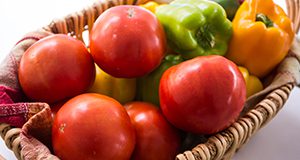
Florida's K–12 schools provide a potential opportunity to increase market channel options for small- and mid-sized diversified farms, but processing, storage, and distribution resources are extremely limited for smaller producers. This 9-page document serves as a model and case study with steps for producers and other stakeholders to conduct a feasibility study before forming a cooperative to sell local fruits and vegetables to schools and other institutional food-service outlets. Written by Jonathan Adam Watson, Danielle D. Treadwell, Catherine Campbell, and Ray Bucklin, and published by the UF/IFAS Department of Agricultural and Biological Engineering, March 2021.
https://edis.ifas.ufl.edu/ae555
The Road to Recovery #5: Self-Assessment of Virtual Facilitation to Build Trust
This fifth publication in the Road to Recovery series discusses how Extension professionals can evaluate techniques to build trust when facilitating virtual programming. Specific recommendations are provided addressing concerns about short- and long-term virtual trust, inclusion techniques, Zoom fatigue, and cybersecurity. This new 5-page publication of the UF/IFAS Department of Agricultural Education and Communication was written by Colby Silvert, Cody Gusto, John Diaz, and Glenn Israel.
https://edis.ifas.ufl.edu/wc388
Crop Management Practices and Labor Inputs for Hop Production in Florida
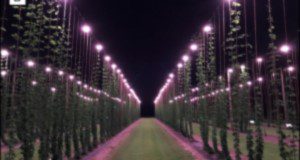
The booming craft beer industry, rising prices of hops, and demand for locally-produced ingredients have recently increased interest in local hop production among growers and brewers. This article describes crop management practices and labor inputs required for small-scale hop production in Florida, with the aim of assisting growers with investment and farm management decisions. It is part of a larger series that will review the challenges of hop production in Florida, based on research experience at the UF/IFAS Gulf Coast Research and Education Center in Balm, FL. This new 6-page publication of the UF/IFAS Horticultural Sciences Department was written by Shinsuke Agehara, Mariel Gallardo, Aleyda Acosta-Rangel, Zhanao Deng, Jack Rechcigl, Tianyuan Luo, and Qi Qiu.
https://edis.ifas.ufl.edu/hs1409
The Road to Recovery #4: Evaluating Virtual Techniques to Reach Clientele and Promote Equity
This fourth publication in the Road to Recovery series explores the challenges Extension professionals may encounter in reaching clientele virtually during a pandemic. This new 4-page publication of the UF/IFAS Department of Agricultural Education and Communication discusses the concept of digital equity and provides recommendations to evaluate efforts to access and connect with key audiences. Written by Colby Silvert, Cody Gusto, John Diaz, and Glenn Israel.
https://edis.ifas.ufl.edu/wc387
The Timber Value of an Existing Forest Stand
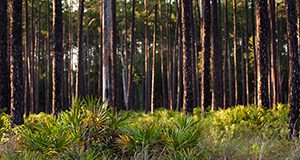
This 4-page publication presents a straightforward and intuitive approach based on compounding costs to determine the timber value of a forest at any stage of its development. Written by Andres Susaeta, and published by the UF/IFAS School of Forest, Fisheries, and Geomatics Sciences, March 2021.
https://edis.ifas.ufl.edu/fr435
Toward Sustainable Urban Landscape Management: Floridians’ Perceptions of Residential Landscapes and Their Maintenance Requirements
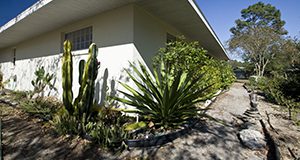
This 5-page fact sheet written by Hayk Khachatryan, Alicia Rihn, Xumin Zhang, and Michael Dukes and published by the UF/IFAS Food and Resource Economics Department is the first in a series from the Sustainable Residential Landscape Project, a study conducted in 2016 to address perceptions of landscapes in Florida, different factors that could influence the adoption of more sustainable landscape options, and ways to promote sustainable landscaping options. The Sustainable Residential Landscape Project was funded by the UF/IFAS Center for Landscape Conservation and Ecology (CLCE).
https://edis.ifas.ufl.edu/fe1090
Elderberry and Elderflower (Sambucus spp): Markets, Establishment Costs, and Potential Returns
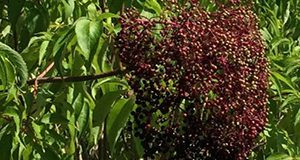
Elderberry is an alternative crop that holds promise for further commercial development in Florida. This 7-page fact sheet written by Kevin Athearn, David Jarnagin, Ali Sarkhosh, Juanita Popenoe, and Steven Sargent and published by the UF/IFAS Food and Resource Economics Department reviews information on markets for elderberries and elderflowers and estimates establishment costs and potential returns for a 3-acre elderberry orchard in Florida. The information is intended to assist farmers in evaluating elderberry as a possible alternative crop. Includes guidance on financial planning for an elderberry enterprise.
https://edis.ifas.ufl.edu/fe1093
Key Plant, Key Pests: Sycamore (Platanus spp.)
This series of Key Plant, Key Pests publications are designed for Florida gardeners, horticulturalists, and landscape professionals to help identify common pests associated with regional flora. This new 6-page publication of the UF/IFAS Environmental Horticulture Department helps identify the most common pests found on trees in the sycamore group, Platanus spp., and it provides information and general management recommendations for sycamore lace bug, bacterial leaf scorch, powdery mildew, anthracnose, and canker stain. Written by Matthew Borden, Kelly Laplante, Juanita Popenoe, Adam Dale, Caroline R. Warwick, and Brian Pearson.
https://edis.ifas.ufl.edu/ep601
Costs and Benefits of Vegetable Gardening
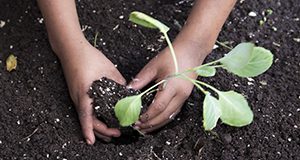
Home vegetable gardening has numerous documented benefits, including savings on the family food bill. How can a gardener calculate cost savings from a garden? Which vegetables cost more to grow in the garden and which cost less? This 10-page fact sheet written by Kevin Athearn, Hannah Wooten, Liz Felter, Catherine G. Campbell, Jessica M. Ryals, Matthew C. Lollar, Juanita Popenoe, Lorna Bravo, LuAnn Duncan, Christa Court, and Wendy Wilber and published by the UF/IFAS Food and Resource Economics Department helps home gardeners estimate the costs and cost savings from vegetable gardening.
https://edis.ifas.ufl.edu/fe1092
The Road to Recovery #6: Evaluating Virtual Strategies to Build Community Capacity and Resilience
This sixth publication in the Road to Recovery series provides tips and strategies for Extension professionals interested in evaluating efforts to promote community capacity building and community resilience using virtual platforms. This new 5-page publication of the UF/IFAS Department of Agricultural Education and Communication was written by Cody Gusto, Colby Silvert, John Diaz, and Glenn Israel.
https://edis.ifas.ufl.edu/wc385
The Punky Wood Ambrosia Beetle and Fungus in Florida that Cause Wood Rot: Ambrosiodmus minor and Flavodon subulatus
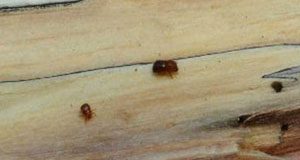
Ambrosiodmus minor is an invasive ambrosia beetle in the southeastern United States, including Florida. It is considered of low importance because evident economic or ecological impacts have not been observed. However, it is associated with a unique ambrosia fungus, Flavodon subulatus, which causes rapid wood rot. Wood decay caused by this association between Ambrosiodmus and Flavodon is increasing in dead trees across the introduced range, especially in Florida. This 4-page fact sheet written by Demian F. Gomez and Jiri Hulcr and published by the UF/IFAS School of Forest Resources and Conservation offers guidance in identification of the pest, the symptoms of an infestation, and explanation of the insect’s biology. In addition, we provide an updated overview of contemporary management and monitoring of the species.
https://edis.ifas.ufl.edu/fr434
Creating Wildflower Habitats in Golf Course Out-of-Play Areas
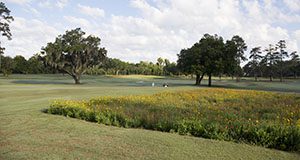
Habitat loss from urbanization and agricultural intensification is reducing native bee and monarch butterfly populations, but golf courses in urban areas present an opportunity to mitigate the negative effects of urbanization on pollinators and the environment. It is feasible to enhance a golf course’s ability to support more species and a greater abundance of wildlife by planting the 40% to 70% of acreage not used for the game of golf in wildflowers. With the most golf courses of any US state, Florida is poised to set the stage for golf course environmental stewardship. This 8-page fact sheet written by Rebecca Nestle, Grace Cope, Nicole Benda, and Adam G. Dale and published by the UF/IFAS Entomology and Nematology Department is intended to provide guidelines for Florida golf course superintendents to aid in their efforts to conserve important wildlife while reducing maintenance inputs and associated costs.
https://edis.ifas.ufl.edu/in1316